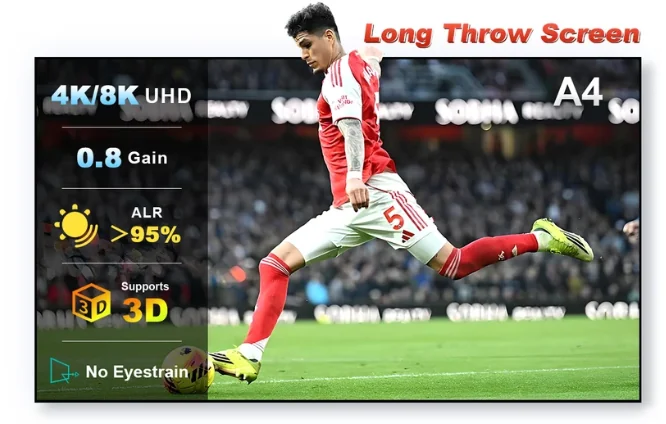
Screen gain describes how much light a surface reflects toward a reference direction compared with a standardized reference surface. It is not a quality score.
Below 1.0 gain
A 0.6 or 0.8-gain surface reflects less light toward the measured direction than a 1.0 reference. That can help darker-looking blacks and ambient-light control, but it requires enough projector brightness.
Around 1.0 gain
A 1.0-gain screen is often treated as neutral reference territory. Neutral white screens can offer broad viewing and predictable brightness in dark rooms.
Above 1.0 gain
Higher-gain screens concentrate more light toward some viewing directions. That can boost brightness, especially on large screens, but can narrow the best viewing zone or increase hotspot risk depending on the material.
Do not multiply ANSI lumens by gain and stop
Simple lumen×gain math is only a rough starting point. Projector calibration, screen size, optical directionality, throw angle, seating, color mode and real-room reflections all matter.
Examples in this site
NothingProjector lists 0.8 gain; Spectra Shadowscape 0.6; Elite CineGrey 3D 1.2; Screen Innovations Black Diamond Fusion 1.0; Valerion Fresnel 1.8. Those figures help explain why these are not interchangeable products.
Test the material before committing to a full-size screen.
The supplied affiliate offer is for the NothingProjector A4 long-throw screen sample.
Continue your research
Viewing angle explained Screen size guide Long-throw ALR guide