A projector screen's viewing angle describes how far off-axis a viewer can move while retaining an acceptable image. With ALR materials, the number matters because the surface is intentionally directional.
Why wide seating changes the screen choice
A single centered chair can tolerate a directional screen that concentrates light tightly. A sectional sofa or open-plan living room may need more even off-axis behavior.
Listed angle is not a universal standard
Manufacturers may define or communicate viewing angle differently. Some publish a full viewing cone; some use half-gain angles. That means 170° on one product and 160° on another are not automatically measured the same way.
How to test
Project a bright neutral scene, then move through the actual seating positions. Look for luminance drop, color shift and edge-to-center non-uniformity. Repeat with the room lights on because ambient-light direction can change the result.
Test the material before committing to a full-size screen.
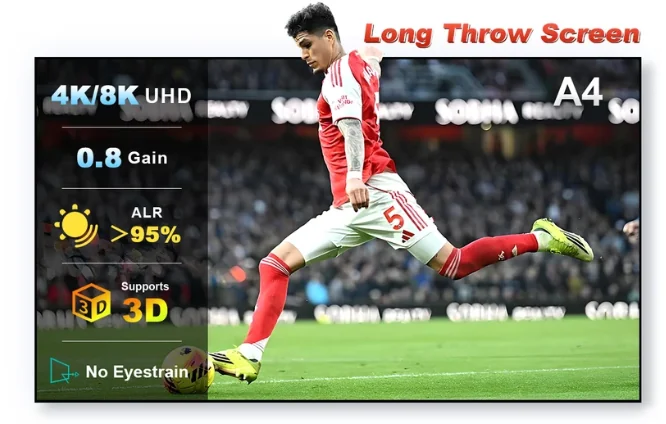
The supplied affiliate offer is for the NothingProjector A4 long-throw screen sample.