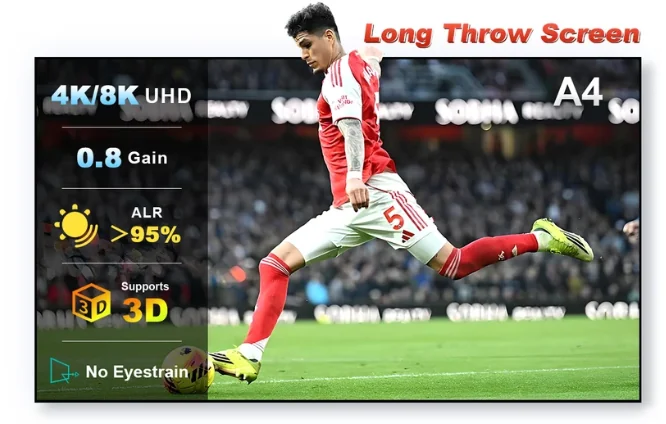
The core choice is not “premium versus basic.” It is directional light control versus neutral reflection. A white screen is often the cleanest solution in a dark room; ALR becomes compelling when ambient light is part of normal viewing.
Brightness
A 1.0-gain white screen is a useful reference. Many ALR materials sit below 1.0 gain and therefore sacrifice some on-axis brightness, while others use higher directional gain to concentrate light. The projector's real output at your intended screen size matters.
Black level and contrast
In a lit room, a white screen reflects room light and raises the black floor. ALR can lower the amount of unwanted light reaching the viewer, making blacks appear darker and increasing usable contrast. In a dark room, the advantage may shrink.
Viewing angle and uniformity
White screens usually offer very broad, predictable viewing. Directional ALR surfaces can vary more across the screen and across seats. Wide manufacturer viewing-angle figures are useful context but do not replace real-room evaluation.
Laser speckle
Some white woven or matte surfaces reduce RGB-laser speckle very effectively, while certain ALR optical structures make it more visible. If you own a triple-laser projector, include speckle in the decision rather than treating it as an afterthought.
Decision rule
If you can make the room genuinely dark, start by asking whether you need ALR at all. If the room is used with daylight or lights on, ALR deserves serious evaluation—ideally with a sample.
Test the material before committing to a full-size screen.
The supplied affiliate offer is for the NothingProjector A4 long-throw screen sample.