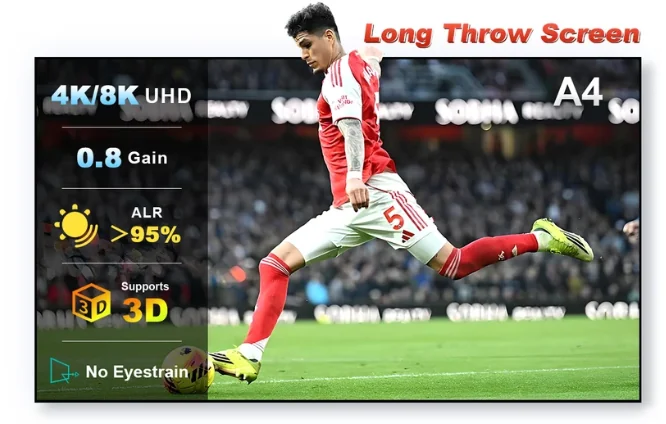
A bright-room projector setup is a system problem. The screen can reject some unwanted light, but it cannot make direct sunlight harmless or compensate for an underpowered projector at any size.
Map the light, do not just rate the room
Identify whether the dominant light comes from windows beside the screen, ceiling fixtures, lamps behind the viewers or direct sunlight. ALR surfaces are directional, so this map matters more than a vague “bright room” label.
Keep screen size realistic
Larger images reduce luminance. If ambient light cannot be controlled, choosing 100 inches instead of 130 inches can be more effective than chasing a stronger marketing claim.
Use enough projector output
Lower-gain ALR screens need sufficient projector brightness. If you plan to use a 0.8-gain surface, evaluate the projector's calibrated output at the target image size rather than relying only on its headline lumen rating.
Control the easiest light first
Blackout curtains, dimmable lamps and reduced reflections from pale walls can deliver large improvements. ALR works best as part of light management, not as permission to ignore it.
Test the material before committing to a full-size screen.
The supplied affiliate offer is for the NothingProjector A4 long-throw screen sample.